











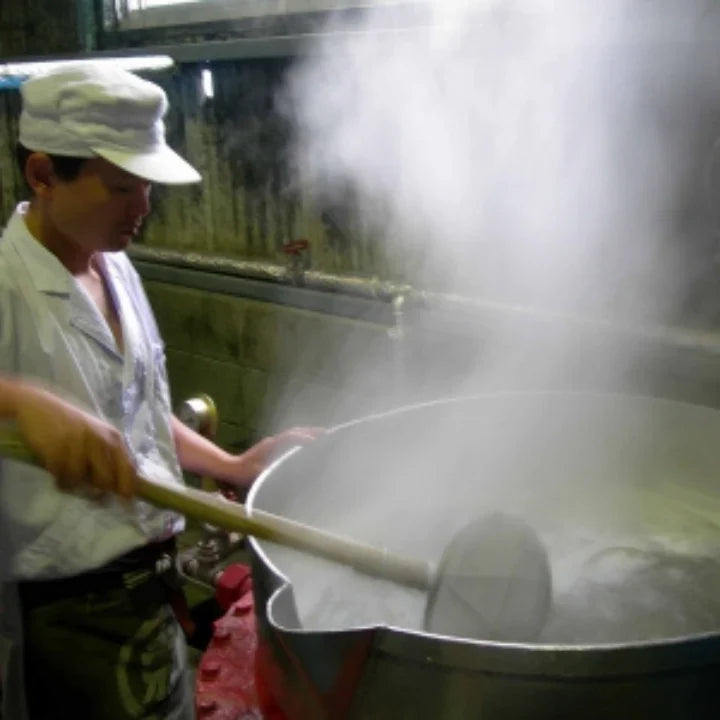

In short: to make dashi, gently heat 1 litre of water with 10 g of kombu and remove the seaweed at 78 °C. Add 30 g of dried bonito flakes, turn off the heat, leave them to steep until they sink to the bottom, then strain. Your stock is ready in 30 minutes.
Dashi is the foundational stock of Japanese cooking. It gives miso soup, ramen, sauces and marinades the savoury depth the Japanese call umami. Making it yourself takes just two ingredients and half an hour. Here is our method, the variations worth knowing and how to use it every day.
What is dashi?
Dashi is an infusion of kombu seaweed and dried bonito, known as katsuobushi. Only the liquid is used. The kombu brings the natural umami of glutamate, while the bonito adds a smoky flavour and richness found in almost every Japanese simmered dish. It is also available in instant forms: concentrated liquid, granules or infusion sachets.
The ingredients
- 1 L of water
- 30 g dried bonito flakes (katsuobushi)
- 10 g Rausu kombu seaweed
There are two ways to get bonito flakes: shave them yourself from a block of dried bonito using a katsuobushi shaver, or buy them pre-shaved in packets of small, ready-to-use pinkish-brown flakes.
Choose water with a low mineral content: very hard water does not extract the kombu’s flavours as well. Do not wash the seaweed; simply wipe it with a damp cloth. The white powder on its surface contributes to its flavour.

How to make homemade dashi
- Pour the water into a saucepan and add the Rausu kombu seaweed.
- Heat gently to let the flavours infuse gradually.
- Once the temperature reaches 78 °C, remove the seaweed. Do not throw it away: you can use it in other recipes, such as tsukudani (simmered seaweed) or soups.
- Add the katsuobushi flakes to the hot water.
- Turn off the heat and leave to steep until the flakes sink to the bottom.
- Strain the stock through a fine-mesh sieve or clean cloth to remove any solids.
You will have a clear, fragrant dashi, ready to use.
What to avoid: letting the kombu boil or squeezing the flakes when straining. The stock will turn bitter and cloudy. If you do not have a thermometer, remove the kombu as soon as small bubbles appear on the bottom of the pan.
First and second dashi
In Japan, ichiban dashi is the first stock described above: clear and delicate, it is reserved for clear soups and dishes where its flavour stands on its own. The kombu and bonito can then be steeped a second time for about ten minutes in half a litre of gently simmering water. This makes niban dashi, a stronger stock perfect for simmered dishes, curry or braised vegetables. Nothing goes to waste.
Four types of dashi to know
| Dashi | Ingredients for 1 L | Flavour | Best for |
|---|---|---|---|
| Awase (classic) | 10 g kombu and 30 g bonito | rounded, smoky umami | miso soup, udon, sauces |
| Kombu | 20 g of kombu, steeped cold for 3 hours | mild, with a hint of the sea | fish, tofu, plant-based cooking |
| Shiitake (vegetarian) | 10 g kombu and 4 dried shiitake mushrooms | woody, deep | vegetarian ramen, simmered dishes |
| Quick | stock sachet or concentrate | similar to awase | everyday cooking |
How do you use dashi stock?
This delicate stock brings out the best in dishes. Use it for miso soup, stirring in the miso off the heat to preserve its flavour, or as the base for shoyu ramen. It also flavours stir-fries, risottos and marinades, and features in homemade ponzu sauce. A few spoonfuls make a Japanese omelette softer and more flavourful.
Ready-to-use dashi
For everyday use, a broth sachet to steep or a concentrated dashi gives you a result close to homemade in just a few minutes. Steep the sachet like tea in gently simmering water; dilute the concentrate according to how you plan to use it. Our broths are imported directly from Japan and available online or at our Paris shop.

Frequently asked questions
How is dashi made?
By steeping kombu in gently heated water, then adding dried bonito flakes and straining.
What is the difference between dashi and miso?
Dashi is a stock; miso is a fermented soya bean paste. Miso soup combines the two: the miso is dissolved in hot dashi.
What can you use instead of dashi?
Instant dashi, or a kombu and shiitake stock for a vegetarian version.
How long does homemade dashi keep?
Three days in the fridge, or one month in ice-cube trays in the freezer.


