











Contrary to popular belief, the finest soba noodles are not always 100% buckwheat: buckwheat flour contains no gluten, making noodles fragile. The secret lies in the ratio of buckwheat and the artisan's skill in kneading and binding the dough.

Our selection committee has curated artisan soba that deliver exceptional texture (koshi) and deep flavour, sourced directly from Japanese master producers.
Comparison chart: the best soba noodles
| Type of soba | Ingredients | Texture and tasting notes | Serving recommendation |
|---|---|---|---|
| The best ju-wari soba | 100% Japanese buckwheat flour. | Rustic texture, delicate bite, very pronounced buckwheat aroma. | Chilled on a bamboo mat (zaru soba) with a light tsuyu dipping sauce to appreciate the grain. |
| The best ni-hachi soba | 80% buckwheat, 20% wheat. | Springy, smooth bite, perfect balance. The gold standard for texture. | Hot in a dashi broth (kake soba) or chilled. |
| The best cha-soba | Buckwheat, wheat, and matcha green tea powder. | Subtle herbaceous notes, lovely green colour, visually refined. | In refreshing summer cold salads, or served with seafood tempura. |

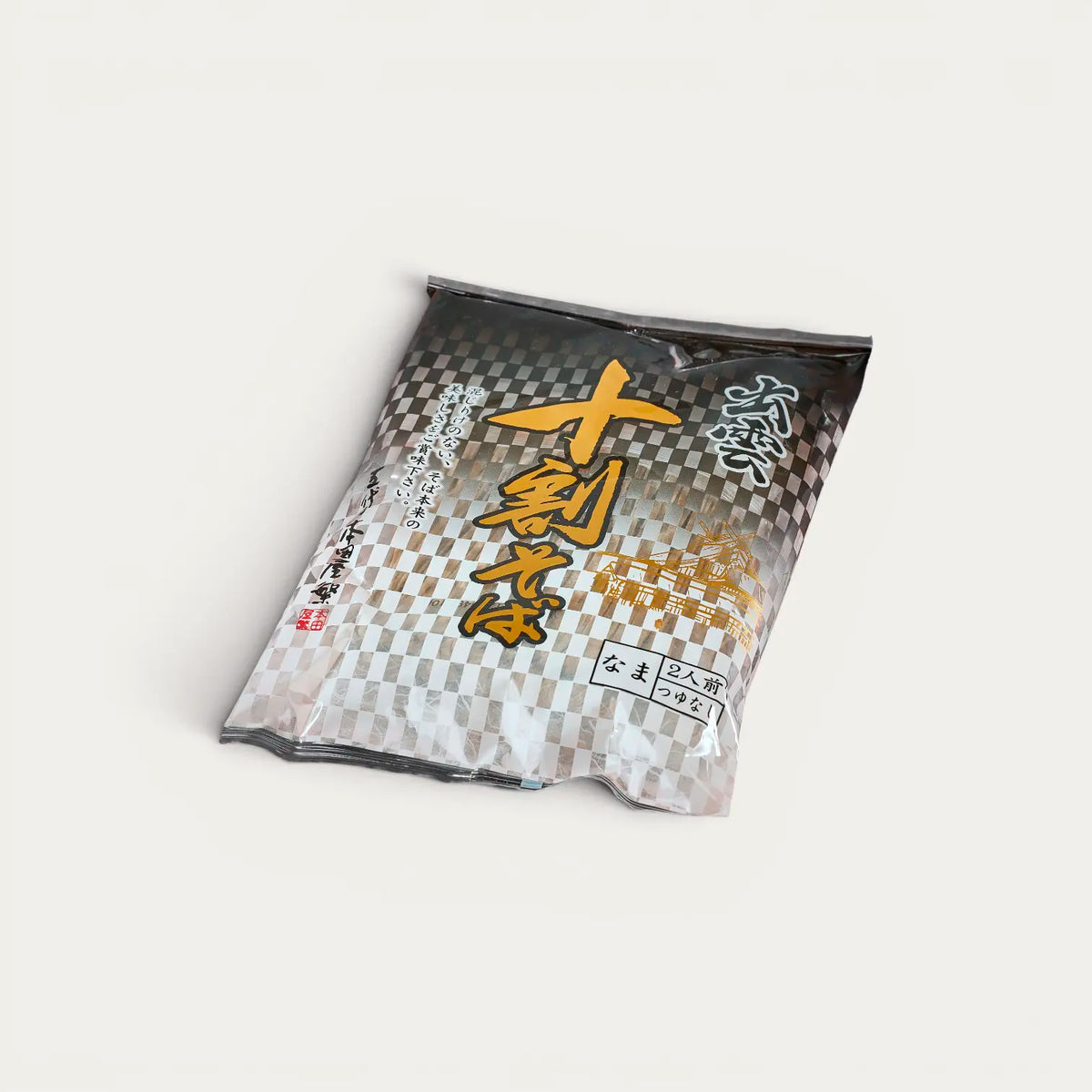
In our range, Izumo Jyuwari soba offers the 100% buckwheat ju-wari experience, while Hokuryu soba and Oku-Aizu soba provide a springier texture for everyday meals.
The Nishikidori expert's view: make sure to save the cooking water from your artisanal soba (called soba-yu). Rich in nutrients, it is traditionally enjoyed at the end of the meal by mixing it into what remains of your dipping sauce.
Our expert tips for cooking and serving soba
Cooking artisan Japanese soba requires close attention. They should not be treated like Italian pasta.

- A large pot of rolling water: cook your soba in a generous volume of unsalted boiling water. Never overcrowd the pot. The noodles need to move freely in the water so they do not stick together.
- The essential cold shock: as soon as the cooking time is up (usually very quick, 3 to 5 minutes), drain the noodles and plunge them immediately into a large bowl of iced water. Rub them gently between your hands to remove surface starch and halt cooking. This ensures their signature firm bite.
- The art of slurping: in Japan, soba noodles are eaten by slurping them briskly. Beyond cooling hot noodles, this technique aerates the mouth and releases the subtle, nutty aromas of buckwheat via retronasal olfaction.
FAQ: Everything you need to know about soba noodles
Are soba noodles gluten-free?
It depends strictly on the variety. Ju-wari soba are made with 100% buckwheat flour and are entirely gluten-free. In contrast, the most common variety (ni-hachi) contains roughly 20% wheat flour to help bind the dough. Always check the ingredient list if you have an intolerance.
Why do my soba noodles break during cooking?
Ju-wari soba noodles are naturally delicate because they lack the elastic gluten network of wheat. To prevent them from breaking, use a wide pot, avoid stirring them aggressively while boiling, and time the cooking precisely.
Should soba noodles be eaten cold or hot?
Both methods are traditional and delicious. In summer, chilled soba (zaru soba) served on a bamboo mat and dipped bite by bite into cold sauce are preferred. In winter, they are enjoyed warm in a piping-hot dashi broth (kake soba), topped with duck, leeks, or tempura.
What is soba-yu and how is it consumed?
Soba-yu is simply the cloudy cooking water left behind after boiling your noodles. It is rich in nutrients, B vitamins, and rutin released from the buckwheat. When enjoying cold soba, tradition calls for pouring this hot water into your leftover dipping sauce at the end of the meal to enjoy as a soothing broth.


