











An unquestionable pillar of fine Japanese cuisine, mirin is far more than a simple ingredient: it is the silent architect of Japanese gastronomic elegance. It imparts that subtle sweetness, aromatic depth, and glossy sheen (teri) characteristic of traditional dishes, from luxurious sashimi to humble family broths. Yet despite its iconic status, it is also one of the most counterfeited and misunderstood condiments on the European market. Finding the best mirin requires deciphering often misleading labels and steering clear of the industrial sugary syrups flooding supermarkets.

What separates a genuine amber nectar, patiently aged in the dim light of a century-old brewery, from a simple chemical seasoning concocted in a matter of hours in a factory? The answer lies in two words: hon mirin, authentic mirin. This guide gives you the historical and technical keys to identifying exceptional vintages — the ones that elevate your teriyaki, your dashi broths, and your delicate marinades.
The supermarket trap: hon mirin vs mirin-fū
The history of mirin is fascinating. In the Edo period, it was not a cooking condiment, but a luxury drink, a sweet liqueur savoured at banquets. Only over the centuries did it make its way into the kitchen. Today, the Western market is flooded with liquid imitations that usurp its name. To identify the best product, one must understand the three main categories shaped by modern history and Japanese tax laws.
1. Hon mirin: the authentic one
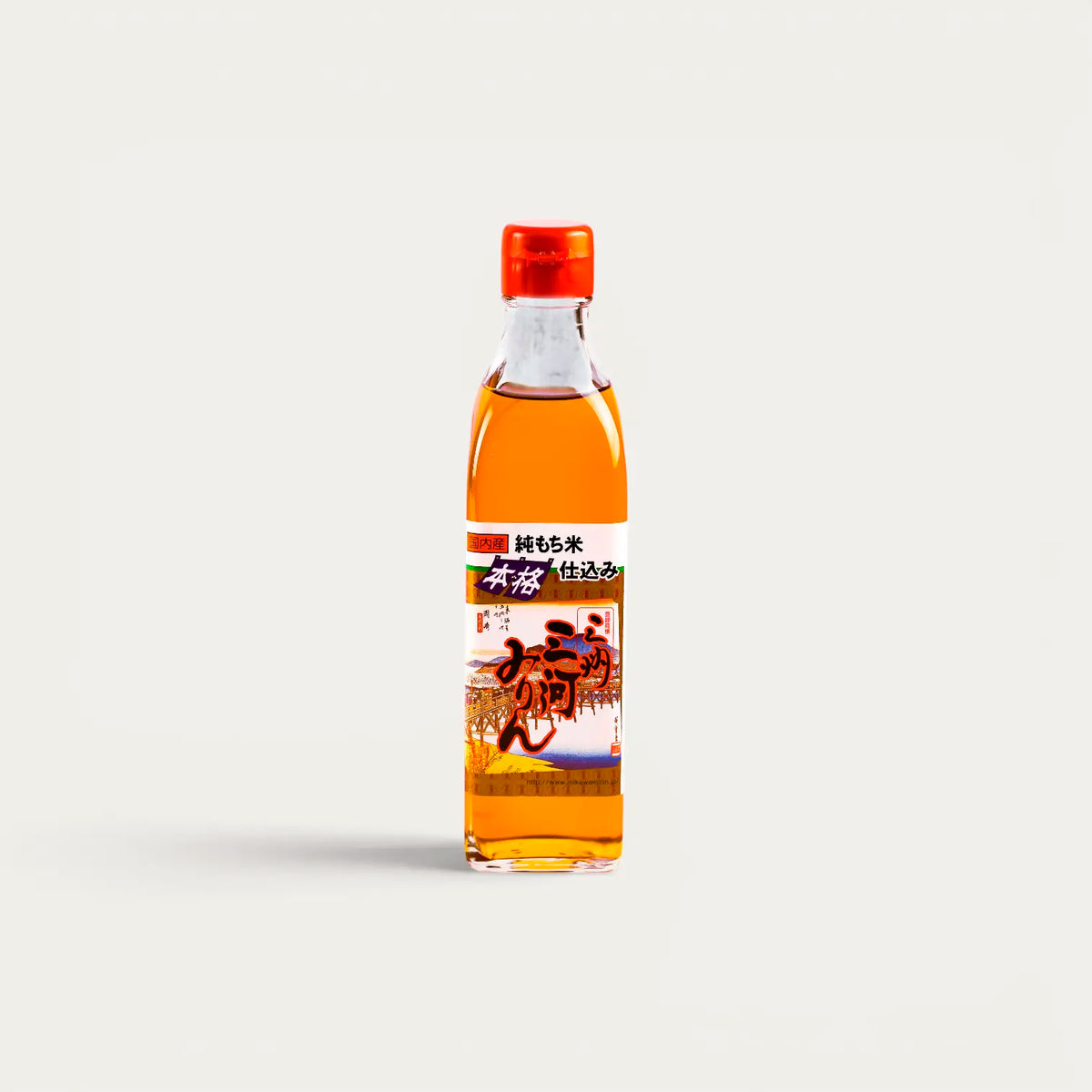
This is the only genuine mirin, heir to centuries-old tradition. Hon mirin ("true mirin") is crafted through long fermentation. The artisan combines steamed glutinous rice (mochigome), koji starter (kome koji), and a traditional distilled spirit (usually rice shochu).
The chemistry of excellence: the process takes several months to several years. During this time, enzymes (amylases) produced by the koji mould slowly break down the complex starches of the glutinous rice into simple sugars. Meanwhile, proteases break down the rice proteins into amino acids, creating a profound source of umami.
Characteristics: it naturally contains around 14% ABV. Its sweetness comes from no added sugar whatsoever, but entirely from the natural transformation of rice. It is a noble condiment whose syrupy texture is the gift of time.

2. Mirin-fū: the "mirin-style" seasoning
Introduced after World War II in a Japan hit by rice shortages and keen to circumvent heavy alcohol taxes, mirin-fū is a purely industrial creation. Its name literally means "in the style of mirin".
Characteristics: it contains less than 1% alcohol, thus escaping spirits taxation. It is an artificial syrup primarily made of high-fructose corn syrup, glucose syrup, water, acidifiers, and synthetic flavourings. Gastronomically, it is a disaster: no depth of flavour, no lasting shine, just a hollow sweetness that masks the natural taste of food.
3. Fermented seasoning: salted mirin
This third category is a hybrid compromise. It is an authentic mirin fermented according to traditional methods, to which a significant amount of salt (sometimes up to 2%) is deliberately added at the end of the process. The purpose? To make the liquid unsuitable for consumption as an alcoholic beverage, allowing producers to bypass alcohol retail licensing in Japan.
Characteristics: it offers very good aromatic quality close to hon mirin, but requires extreme care in the kitchen. It demands a drastic reduction in salt elsewhere in your recipe, especially if you are adding soy sauce or miso.
The expert's advice
The best mirin for an exceptional table will always be a hon mirin. Its complex natural sweetness cannot be replicated by industrial corn syrup. Furthermore, its natural alcohol content is technically essential: during cooking, the evaporating alcohol carries away the organic compounds responsible for strong meat or fish odours. It acts just like a fine wine or an excellent rice vinegar used to deglaze meat in French cuisine.
Strict criteria for choosing exceptional mirin
- Colour and the Maillard reaction: a young hon mirin has a pale yellow, slightly golden colour. But mirin is a living product. The more it ages (exceptional vintages rest for up to 10 or 20 years), the darker its colour becomes due to the Maillard reaction. An aged mirin takes on a hue ranging from deep amber to chocolate brown, with notes of salted butter caramel, candied prune, roasted walnut, and molasses.
- Purity of ingredients: the label must strictly list only three components: glutinous rice (mochigome), rice koji (kome koji), and distilled alcohol. If you see "sugar", "syrup", "acidifier", or "flavour enhancer", put the bottle back.
- Maturation time and craftsmanship: the leading Japanese houses proudly display their ageing times. Ageing for one to three years guarantees superior quality for everyday use. The finest producers preserve artisanal methods, delicately filtering the liquid through suspended cotton sacks and letting gravity do the work without ever forcing the pressing.
How to elevate your dishes with a grand cru?
Using authentic mirin elevates your cooking. Thinking its role is merely to sweeten a dish is a fundamental mistake: it is a major aromatic binder, a natural flavour enhancer, and an outstanding texturiser.

The holy trinity of Japanese gastronomy
Alongside a great artisan soy sauce and a good Japanese cooking sake, it is the central pillar of the famous Japanese seasoning trinity. Used in precisely measured proportions (the renowned 1:1:1 ratio for base sauces), these three elements are the secret of top-tier dining.
The secret to the perfect glaze: teriyaki and kabayaki
Hon mirin is essential for crafting an authentic teriyaki or kabayaki sauce. Unlike white sugar, which burns and caramelises aggressively, mirin's complex polysaccharides create a spectacularly shiny mirror glaze under heat, along with a gentle, uniform caramelisation that coats meat or fish perfectly without ever turning bitter.
Holding texture: the art of nimono
In Japanese simmered dishes, mirin's molecular structure plays a crucial role. The alcohol and complex sugars quickly penetrate the core of the ingredients and tighten protein fibres, especially in delicate fish, potatoes, or root vegetables. This prevents the flesh from breaking apart during long cooking, ensuring pieces remain firm and intact, yet melt-in-the-mouth inside.
Raw use and high-flying desserts
An exceptional aged mirin (koshu mirin) is not meant for cooking. Its aromatic complexity is so rich that it should be used like a great traditional balsamic vinegar. A few drops over vanilla ice cream, on a strong blue cheese, or stirred cold into a toasted sesame oil vinaigrette are enough to create a rare gastronomic experience.
Mirin FAQ
Can you substitute regular sugar or honey for mirin?
Absolutely not. Sugar provides only one dimension: sweetness. Hon mirin brings complex sweetness, a massive dose of umami, textural gloss, and above all alcohol, which chemically neutralises unpleasant cooking odours. Neither white sugar, brown sugar, nor honey possess these combined properties.
How to store an opened bottle of hon mirin?
Unlike industrial imitations loaded with water and syrup, genuine hon mirin, naturally rich in alcohol, keeps perfectly at room temperature in a cool place away from direct light. It must never be put in the fridge, as the cold can cause its natural sugars to crystallise.
Is there residual alcohol in dishes prepared with hon mirin?
Hon mirin contains around 14% ABV in the bottle. However, during cooking or deglazing, the vast majority of this alcohol evaporates quickly under heat. It leaves behind only its deep aromas, its umami, and the elegant sweetness of fermented rice.
Can you drink hon mirin straight?
Not only is it possible, but that was its original use. In the Edo period, hon mirin was enjoyed as a luxury sweet liqueur during celebrations. Today, vintages aged for several years can easily be enjoyed on their own, served chilled at the end of a meal like a fine fortified wine or an aged port.
What is the exact difference between cooking sake and mirin?
Although both come from rice fermentation, their roles are complementary yet distinct. Cooking sake is dry, higher in alcohol, and contains very little sugar; it is used mainly at the beginning of cooking to tenderise meat fibres and add body to the dish. Mirin, on the other hand, is much sweeter thanks to the glutinous rice. It is often added towards the end of cooking to impart shine and sweetness and to complete the glaze.
Does mirin contain gluten?
A true traditional hon mirin (glutinous rice, rice koji, and distilled rice alcohol) is naturally gluten-free. However, extra vigilance is required with industrial mirin-fū, which may contain alcohols from various grain sources or problematic thickeners.
Do you need to buy an expensive aged mirin for cooking?
For everyday cooking, a young one-year-old hon mirin is perfect. On the other hand, a mirin aged for 3, 5, or 10 years is a luxurious finishing product, extraordinary for refined glazes or used raw in very small amounts.


