












In Japanese fine dining, dashi is far more than a simple broth: it is the cornerstone of every dish, the beating heart of the signature umami flavour. While Western cuisine relies on rich meat and bone stocks simmered for hours to extract flavour, Japanese dashi is the ultimate expression of minimalism. It is a precise, delicate extraction completed in just minutes using ingredients of extraordinary purity, dried, fermented, and aged by artisans with centuries of expertise.

This delicate infusion acts as a natural flavour enhancer, stimulating the palate and harmonising the flavours of other ingredients without overpowering them. Faced with a market flooded with instant powders loaded with synthetic MSG, top chefs and demanding cooks are returning to authentic artisanal methods. The Nishikidori tasting committee has selected the archipelago's finest ingredients for you. Explore our comparison to choose the best dashi and broth ingredients and bring authentic excellence to your soups, ramen, and simmered dishes.
Comparison chart: the best dashi and broths
Choosing the best dashi depends entirely on the dish you want to create and the flavour profile you are looking for. Here is our guide to the finest traditional broths to inspire your cooking.
| Type of broth | Key ingredients | Flavour profile and texture | Best uses |
|---|---|---|---|
| The best versatile dashi (awase dashi) | Kombu (seaweed) and authentic katsuobushi (dried bonito flakes). | Absolute balance. The symbiotic union of glutamic acid from sea kombu and inosinic acid from the smoky notes of bonito. | Traditional miso soups, ramen broth bases, Japanese hot pots (nabe), noodle dipping sauces. |
| The best plant-based dashi (shojin dashi) | Kombu and dried shiitake mushrooms. | 100% vegan (from Buddhist temple tradition). Deep, earthy, with rich forest floor notes and subtle astringency. | Broth-cooked seasoned rice (takikomi gohan), braised vegetables, clear vegan broths, hot soba noodles. |
| The best seafood dashi (kombu dashi) | Exclusivelykombu seaweed thick Hokkaido kelp. | Pure minimalism. Crystal clear, delicate, subtly briny, it enhances the dish without overpowering the other ingredients. | Delicate white fish dishes, shellfish, gently warmed tofu (yudofu), steaming broths. |
| The best concentrated liquid dashi (shiro dashi) | Dashi base seasoned with shiro shoyu (white soy sauce), mirin, and salt. | Extremely rich, potent, and ready to use. Preserves the visual clarity and natural colour of your dishes thanks to white soy sauce. | Soft-set Japanese rolled omelettes (tamagoyaki), savoury custards (chawanmushi), quick-poached spring vegetables. |
Our expert tips for making and using dashi
Making the finest first-extraction dashi (ichiban dashi) is an art of temperature and timing. Unlike Western veal stocks that withstand hard boiling, Japanese ingredients must never be overheated.

The golden rule of kombu: never let it boil
Hokkaido kombu seaweed is naturally coated with glutamic acid crystals (never wash away this fine white powder). It should always be infused over gentle heat. If the water comes to a rolling boil while the kelp is still in the pot, its alginate content will release a viscous, slimy substance and an unpleasant bitter, iodised taste that spoils the broth. Always remove the seaweed just before the water begins to simmer.
Handling katsuobushi with care
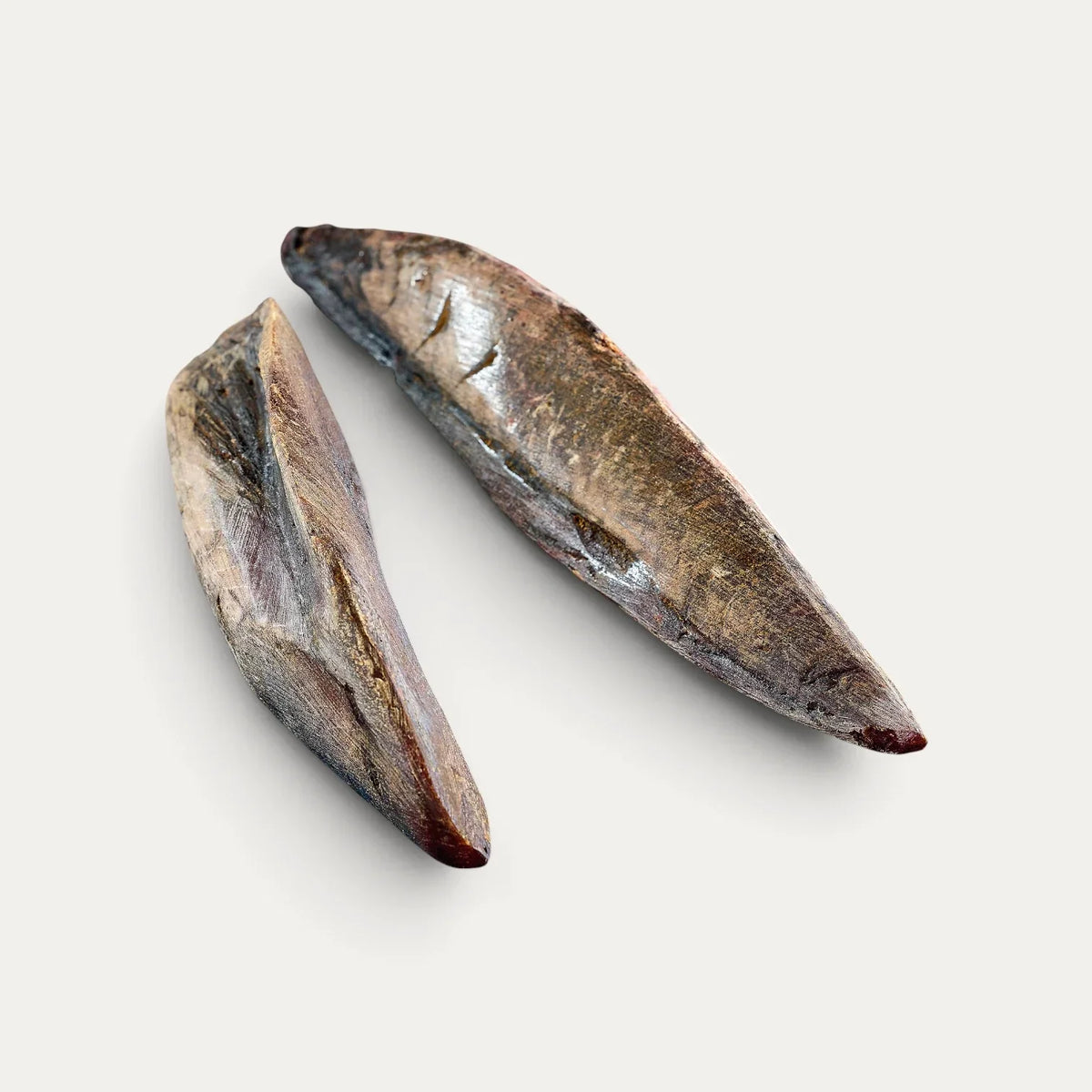
Skipjack tuna (katsuobushi) undergoes an intensive process of curing, oak-smoking, and drying over several months or years until it becomes hard as stone. When adding these shaved flakes to hot water, remove the pan from the heat immediately. Let the flakes steep gently for a few minutes until they sink to the bottom on their own. Then strain gently without squeezing or pressing them against the sieve, which would cloud the broth with microparticles and spoil its clarity.
Zero waste: the economical and flavorful secret of niban dashi
Japanese gastronomy avoids waste (the concept of mottainai). Once your refined first-brew broth (ichiban dashi) is strained, save the used seaweed and bonito. Place them back in water with a small handful of fresh bonito flakes and simmer over medium heat for longer. This yields niban dashi (secondary broth). Less delicate and less aromatic, it extracts the remaining robust flavours and is ideal for full-flavoured dishes like braised root vegetables (nimono), braised pork, or hearty everyday soups.

Tasting note & culinary chemistry: just like our authentic Japanese matcha teas, the quality of the water used for your dashi is crucial. Hard water rich in minerals like calcium and magnesium hinders the extraction of umami from kombu. Always use filtered or soft spring water with low dry residue to allow the amino acids to dissolve completely.
FAQ: Everything you need to know about dashi
Why do chefs avoid instant dashi powder (hondashi)?
Instant powders sold in supermarkets are the equivalent of stock cubes. They are made mostly of salt, sugar, yeast extract, and synthetic MSG designed to aggressively imitate umami, with only a tiny fraction of real smoked bonito. The natural synergy of real dashi creates a lasting finish and depth of flavour that synthetic additives cannot replicate.
What makes Hokkaido kombu so special compared to other seaweeds?
Hokkaido benefits from ice-cold sea currents and an environment dense in mineral nutrients. These harsh waters force the seaweed to grow thick and store massive amounts of nutrients to survive. This is where the world's most prized kelps grow (Rishiri, Rausu, Ma Kombu). Each terroir offers a distinct profile: crystal clarity, rich texture, or deep savoury notes.
Does dashi broth contain gluten or allergens?
Traditional homemade dashi (water, kombu, katsuobushi, or shiitake) is 100% natural and completely gluten-free. Be cautious, however, with liquid broths or concentrates (shiro dashi or tsuyu), which often contain white soy sauce (shiro shoyu) or standard soy sauce brewed with wheat.
How do you use and dilute shiro dashi (liquid dashi)?
Shiro dashi is a highly concentrated umami base. It is never used undiluted as a soup broth. It should be diluted in hot water (typically 1 part dashi to 10–15 parts water) to instantly create a clear broth. It can also be used neat, by the teaspoonful, as a secret seasoning to enhance dumplings, marinades, or Japanese mayonnaise.
How long can homemade dashi broth be stored once made?
Ichiban dashi is at its aromatic best within an hour of brewing, as its delicate aromas oxidise quickly. You can, however, store it in the fridge in an airtight container for 2 to 3 days. It also freezes well, especially in ice cube trays for easy portioning.


