











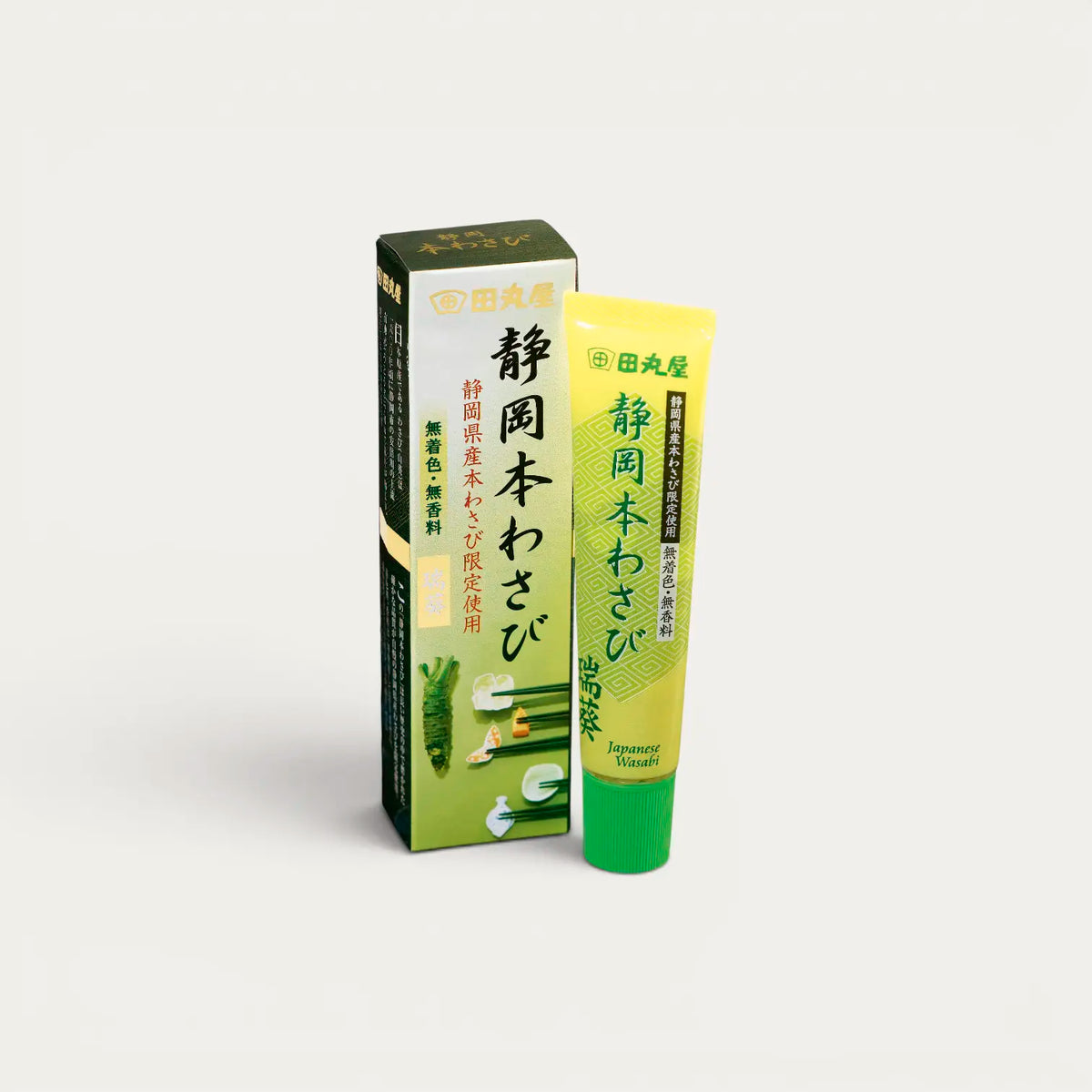

Direct answer — the best wasabi is real wasabi (Wasabia japonica), known as hon-wasabi, identifiable by this plant listed at the top of the ingredients. Please note: around 95% of “wasabi” sold in Europe is actually dyed horseradish. Real wasabi provides a subtle heat that rises to the nose with floral notes; fake wasabi produces an aggressive, lingering burn.
| Criterion | Real wasabi (hon-wasabi) | Imitation (dyed horseradish) |
|---|---|---|
| Plant | Wasabia japonica / Eutrema japonicum | Horseradish (Armoracia rusticana) |
| Flavour | Subtle, floral, rises to the nose then subsides | Aggressive, lingering heat |
| Colour | Natural pale green | Bright green (E102/E133 colourings) |
| Price | High (rare plant) | Inexpensive |
Wasabi is one of the most famous Japanese condiments… and one of the most misunderstood. Most people have never tasted the genuine plant: in the vast majority of cases, the small green mound served with sushi is a mixture of horseradish, mustard, and green food colouring. This guide helps you identify and choose authentic wasabi.
Real wasabi vs horseradish: the great confusion
Real wasabi, or hon-wasabi, comes from the plant Wasabia japonica (also known as Eutrema japonicum), which grows with its roots in cool, running mountain spring water in Japan. Its rhizome — a knobby, green subterranean stem — is finely grated just before serving. Horseradish, on the other hand, is a European root (Armoracia rusticana) that is cheap and hardy. Both belong to the Brassicaceae family, which explains their shared pungency, but their flavour profiles are entirely different.

The figure that changes everything — according to specialist importers and several chefs, only around 5% of the wasabi consumed in Europe is real wasabi. The rest is dyed horseradish. Unless a product explicitly states “hon-wasabi”, assume it is horseradish.
How to recognise real wasabi?
- Read the label: “Wasabia japonica” or “Eutrema japonicum” should appear at the top of the list, ideally with a high percentage.
- Watch out for colourings: E102, E133, or an overly bright green reveal disguised horseradish.
- Taste the heat: real wasabi rises to the nose and quickly fades, with herbal notes; fake wasabi burns for a long time.
- Look for the phrase hon-wasabi shiyo (using real wasabi) on Japanese products.
Fresh, tube, or powder?

| Form | Quality | Use |
|---|---|---|
| Fresh rhizome | The best (grated to order) | High-end sushi, sashimi |
| Tube (hon-wasabi) | Good if the percentage is high | Convenient for everyday use |
| Powder | Variable | To rehydrate, useful in a pinch |
The fresh rhizome, finely grated (ideally on a traditional grater), offers the ultimate experience. In a tube, choose a product that clearly indicates real wasabi, such as our Hon'Wasabi paste. Powder, which requires rehydration, works in a pinch but falls short.
Storage
Store the fresh rhizome wrapped in a damp cloth in the refrigerator (about two weeks). Once opened, keep the tube refrigerated and use within a few weeks. Always grate wasabi at the very last moment: its volatile pungency evaporates in minutes.
Why is there so much fake wasabi?
The reason comes down to economics. Real wasabi is rare, expensive, and highly perishable: the plant takes years to grow, requires cool running spring water, and its pungency fades minutes after grating. Horseradish, by contrast, is cheap, grown everywhere, stable, and easy to transport. Coloured green and boosted with mustard, it mimics the fiery kick well enough that most consumers are none the wiser. As long as regulations allow the word “wasabi” on the label provided horseradish is listed, substitution remains widespread — hence the importance of checking the ingredients.
How to grate and serve fresh wasabi

Fresh rhizome is grated at the very last moment in circular motions on a fine grater (traditionally shark skin, or an ultra-fine metal grater). Prepare only the amount needed, as the aroma develops upon grating and fades within 10 to 15 minutes. For sushi, purists place a small dab of wasabi between the rice and the fish rather than dissolving it in soy sauce — which dulls its fragrance. Served this way, authentic wasabi enhances the fish without overpowering it. Pair it with our seasoned sushi rice recipe.
Our comparative selection
Unlike industrial horseradish-based pastes, our wasabi range is crafted from genuine wasabi. Comparison:
| Our product | Form | Ideal for |
|---|---|---|
| Fresh wasabi (rhizome) | Fresh, grated to order | The ultimate experience: sushi, sashimi |
| Wasabi paste | Real wasabi (root, stem, leaf) | Convenient, potent, and fragrant |
| Kona Wasabi Powder | Natural powder, no additives | To rehydrate, long shelf life |
Frequently asked questions
Is the wasabi in restaurants real wasabi?
Rarely. The vast majority of restaurants, in Europe as well as in Japan, serve dyed horseradish. Only establishments that explicitly state it use hon-wasabi.
How can you tell if wasabi is authentic?
Check the ingredient list: “Wasabia japonica” or “Eutrema japonicum” should be listed first, with no E102/E133 colourings.
Why is real wasabi so expensive?
The plant is rare and difficult to cultivate: it requires cool, pure running mountain water and several years of growth.
What is the difference in taste?
Real wasabi offers a delicate heat that rises to the nose and quickly fades, with floral notes; horseradish is harsh and lingering.
How do you use fresh wasabi rhizome?
Grate it very finely just before serving, in small amounts. Its aroma is volatile and dissipates within minutes.
How long does fresh wasabi keep?
Around two weeks, wrapped in a damp cloth in the refrigerator.
Is powdered wasabi real wasabi?
Not always: check the ingredients. Many powders are made from horseradish and mustard.
Does wasabi have health benefits?
Traditionally, it was prized for its antibacterial properties when served alongside raw fish — a key asset in a country that consumes large quantities of sashimi.
Our verdict
To taste real wasabi, there is only one secret: check the label and look for “Wasabia japonica”. Fresh rhizome grated to order is the ultimate experience; a good tube of hon-wasabi is the best everyday compromise. Steer clear of neon green pastes made from dyed horseradish.


