













A cornerstone of Japanese gastronomy for over a millennium, miso is much more than a simple condiment: it is the true soul of Japanese cuisine. This ancestral fermented paste is the best-kept secret of umami, the famous fifth taste, rounded and deep, sought after by top Michelin-starred chefs across the globe. Yet, with so many products flooding the European market today, discerning food lovers are faced with a fair question: how do you identify and choose the best miso to elevate your everyday cooking?

The secret to culinary excellence lies in mastering time, demanding ingredient purity, and preserving the craftsmanship of master brewers (kura). Authentic miso paste has nothing in common with the lifeless, pasteurised industrial preparations found in supermarkets. Tasting an exceptional miso is much like discovering a fine wine: you taste a terroir, a vintage, and the artisan's touch. Explore our expert guide to selecting the very finest artisanal miso.
The art of fermentation: industrial vs artisanal
To understand what defines an exceptional product, one must look closely at its origin and production method. Miso relies on a disarmingly simple trio of ingredients: soybeans, sea salt, and a natural fermentation starter called koji (usually cultured on rice or barley grains). How these three elements interact determines the final quality of the product.
The illusion of industrial miso
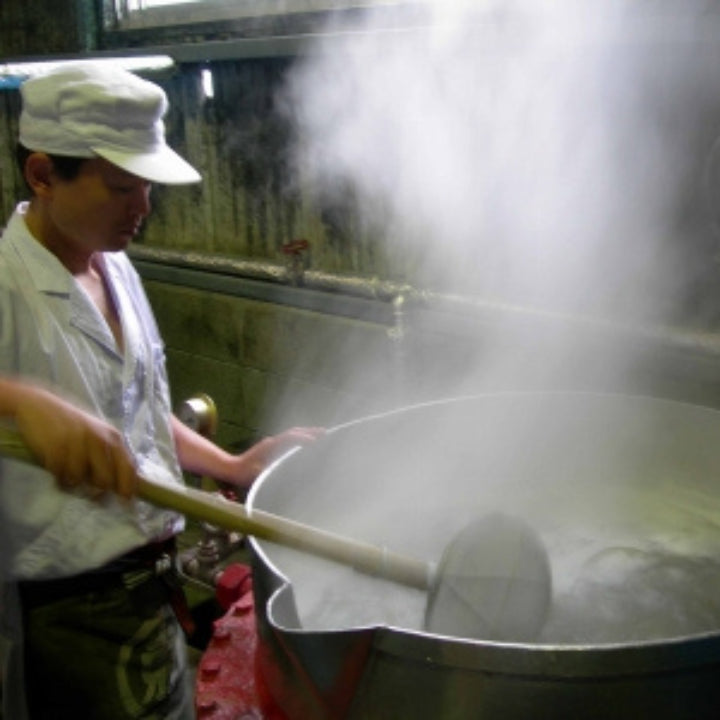
Modern mass production has sacrificed the soul of miso for the sake of profitability. This industrial miso is fermented artificially in massive stainless-steel vats maintained at elevated temperatures to rush the fermentation process down to just a few weeks, compared to several months or years traditionally. To halt this rapid fermentation and stabilise the product for supermarket shelves, the paste is then heavily pasteurised. This thermal shock irreversibly destroys beneficial enzymes and natural probiotics, stripping the aromatic profile of its subtlest notes. To mask this lack of depth, industrial producers routinely add refined sugars, yeast extracts, alcohol, or monosodium glutamate. The result is flat, salty, and devoid of life.
The excellence of artisanal miso
Conversely, traditional Japanese craftsmanship allows time to do its work. Artisanal miso ferments naturally with the rhythm of Japan's four seasons, braving harsh winters and hot, humid summers. This slow, respectful process can last from six months to over three years. Crucially, the paste is never pasteurised: it is known as nama miso (living miso). The resulting aromatic complexity is exceptional, offering evolving tasting notes comparable to a mature cheese or an exceptional soy sauce.
The magic of koji and cedar barrels (kioke)
Crafting a grand cru relies on two invisible pillars. The first is koji (Aspergillus oryzae), a noble microscopic fungus. Its role is to break down the complex proteins in soybeans into free amino acids (the source of umami) and carbohydrates into simple sugars (the source of sweetness).
The second pillar is the vessel: the kioke. The finest misos are aged in gigantic century-old cedar barrels. Unlike sterile stainless steel, wood breathes. Its fibres house millions of micro-organisms endemic to the brewery. This unique micro-flora imparts each batch with its own distinctive flavour signature — subtly woody, resinous, and roasted aromas that are impossible to reproduce industrially.
Shiro, aka, awase, mugi: which miso should you choose for your dishes?
There is no single "best" miso in absolute terms; it depends entirely on the culinary pairing you wish to create. The colour of the paste is the first and most reliable indicator of its aromatic profile: the longer the fermentation and the higher the proportion of soybeans, the darker the colour becomes via the Maillard reaction, and the more intense the flavour.

Shiro miso (white miso): Kyoto's elegant sweetness
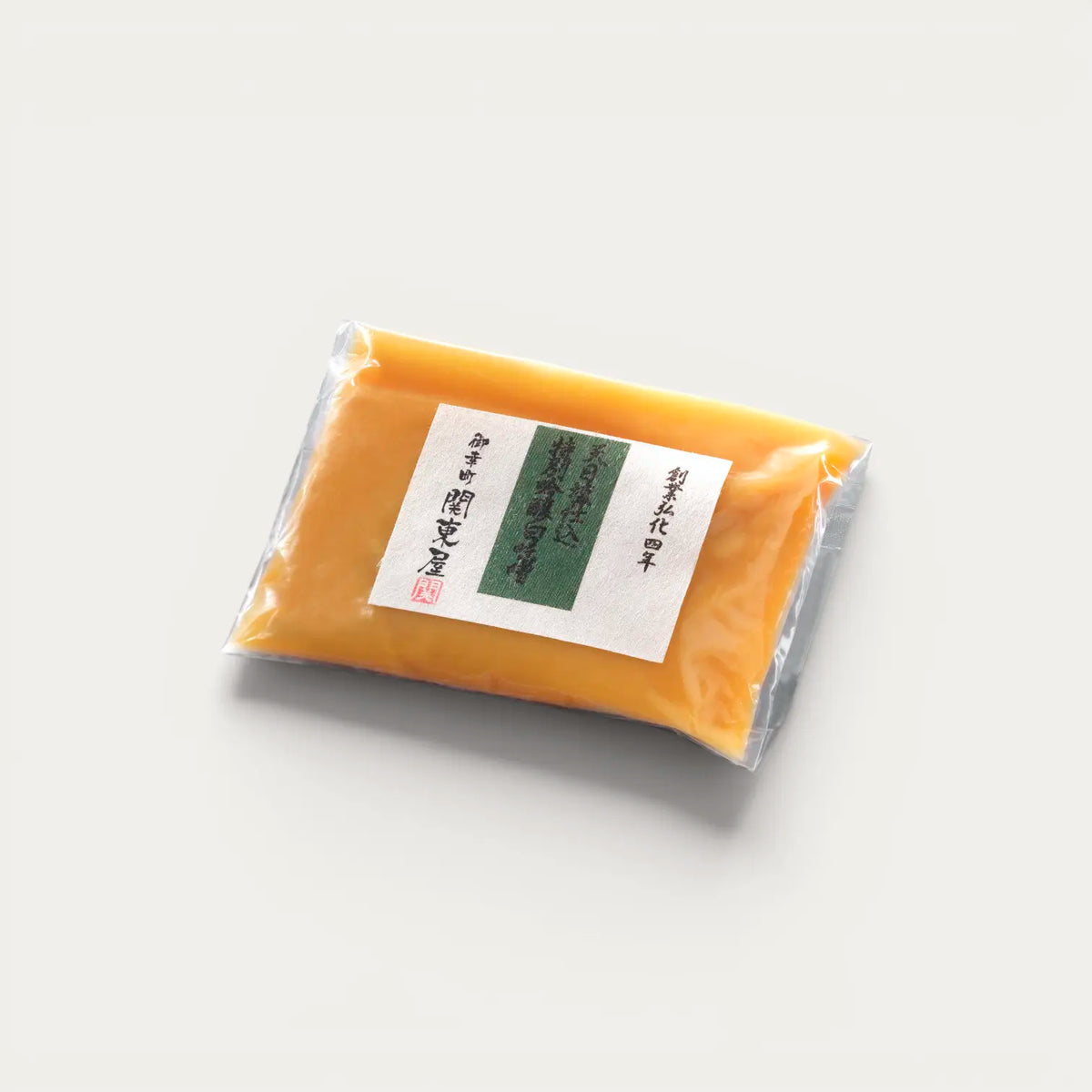
Originating primarily from the Kansai region (Kyoto), shiro miso is made with a significantly higher proportion of rice than soybeans. Its ageing period is very short (a few weeks to a few months). It is distinguished by an exceptionally smooth, creamy texture and a very low salt content.
- Tasting notes: delicately floral, very sweet, with notes of fresh butter, cream, and chestnut.
- Perfect pairings: this is the miso for delicate dishes. Ideal for making vinaigrettes, creamy sauces, or marinating prized white fish (such as the famous saikyo yaki black cod or salmon). Contemporary pastry chefs also love it for adding a hint of savoury umami to caramel, praline, or white chocolate desserts.
Aka miso (red miso): bold character
This miso undergoes a long fermentation, often spanning one to three years. The proportion of soybeans is predominant. The extended Maillard reaction gives it a colour ranging from amber-brown to dark red, along with a fascinating aromatic concentration.
- Tasting notes: roasted cocoa, coffee, ripe fruit, full-bodied, with a refined, subtle astringency on the finish.
- Perfect pairings: essential for winter stews, marinades for red meats (wagyu beef, duck), braised dishes, or for adding impressive structure and depth to a dashi broth.

Mugi miso (barley miso): rustic authenticity from the South
Particularly popular on the island of Kyushu in southern Japan, mugi miso uses barley instead of rice to cultivate the koji. It often features a grainier texture where the whole grains remain visible.
- Tasting notes: earthy, malty, rustic, with a comforting sweetness and a characteristic aroma of toasted grains.
- Perfect pairings: wonderful for making rustic soups rich in root vegetables (daikon, carrots, burdock root), or to accompany stir-fried pork dishes.
Awase miso: the chef's golden balance
This is not a distinct fermentation method, but a master blend. Awase miso combines white miso and red miso (often in equal parts). It is the most versatile and accessible choice for home cooks looking to explore Japanese gastronomy. It pairs the comforting sweetness of shiro with the rich depth of aka, delivering balanced flavour with no risk of overpowering your everyday meals.
3 key criteria for identifying a "grand cru" miso
When faced with confusing labels, rely on these three uncompromising quality indicators that define a true gourmet product:
- The "unpasteurised" label (nama miso): this is the ultimate requirement. A living miso continues to evolve. Its enzymes remain active, meaning that when used in marinades, it literally "pre-digests" the proteins in meat and fish, making them extraordinarily tender.
- Rarity of raw ingredients: check the ingredient list. Not only must it be minimalistic (soybeans, rice or barley, salt, koji, and that is all), but the provenance of the soybeans is crucial. Less than 5% of soybeans consumed in Japan are grown locally. A luxury artisan miso will pride itself on using locally grown, non-GMO Japanese soybeans and hand-harvested natural sea salt.
- Brewery provenance (kura): exceptional miso is never anonymous. It clearly indicates its prefecture of origin and highlights the heritage of the family house behind it, sometimes spanning more than ten generations. Transparency is the hallmark of quality.
Storage and handling: preserving excellence in the kitchen
Unpasteurised artisanal miso is a living, precious product. Once opened, it must be stored in the refrigerator in an airtight container. Air is its enemy: press cling film directly onto the surface of the paste to prevent oxidation. Over the months, it is completely normal for its colour to darken slightly or for a thin film of liquid (tamari) to form on top. This is a natural sign of maturation: simply stir this flavourful liquid back into the paste with a spoon.
In the kitchen, boiling this paste is the most critical mistake. Harsh heat instantly destroys natural probiotics and dissipates the delicate aromas built over years of fermentation. Much like fine sake, which should never be overheated, miso is always added at the very end of cooking. Use a small whisk or a miso strainer (miso koshi) to dissolve it into simmering liquid off the heat, just before serving.
Nishikidori's commitment to fine gastronomy
Our primary mission is to serve as an uncompromising bridge between Japan's most talented artisans — guardians of an endangered heritage — and Europe's most discerning dining tables. By choosing a miso from the Nishikidori range, you reject industrial homogenisation. You are guaranteed a grand cru sourced directly from the heart of the Japanese countryside and mountains, straight from century-old houses without intermediaries.
FAQ on miso
What is the best miso for making a perfect traditional miso soup?
For a classic, harmonious everyday soup, awase miso (a blend of white and red) is the top recommendation among chefs. It offers the perfect aromatic balance: neither too sweet like a pure shiro, nor too bold and salty like a pure aka.
Why are some artisanal misos much more expensive than others?
The price is a direct reflection of time and quality. A miso aged for three years requires barrel space and daily supervision. Added to this is the use of exceptional local ingredients (non-GMO Japanese soybeans, natural sea salt) and the rarity of the master brewers' manual labour, justifying a significantly higher production cost than accelerated industrial processes.
Does quality miso paste expire?
Artisanal miso is a powerful natural preservative thanks to the combination of fermentation and salt. When kept refrigerated, it does not spoil in a microbiological sense. However, because it is alive, its aromatic profile will continue to evolve, darken, and deepen.
Which miso should you choose for a low-salt diet?
Shiro miso from the Kyoto region undoubtedly has the lowest salt content (often around 5–8%, compared with 10–16% for red miso). It is very mild and floral, and owes its flavour to the high proportion of sweet rice used in its fermentation.
Is there a completely gluten-free miso?
Yes, it is even the standard for many misos. Traditional rice-based pastes (kome miso) or those made purely from soybeans (hatcho miso) are naturally gluten-free. However, check labels carefully and avoid mugi miso, which is specifically fermented using barley.
Should miso paste be eaten raw or cooked for health benefits?
Both approaches are culinarily valid, but for health benefits, raw is best. To fully enjoy its active enzymes, vitamins, and probiotic properties, it is best eaten raw (in dressings, miso mayonnaise) or stirred into warm broth off the heat.
What is the fundamental difference between miso and a Western stock cube?
A stock cube is an ultra-processed concentrate packed with refined salt, modified fats, and artificial flavour enhancers to create an illusion of flavour. Artisanal miso, in contrast, is a whole, living food. Slowly fermented, it provides unmatched natural depth while delivering digestive and nutritional benefits documented over centuries.


